 admin
adminIf you have dreamed of studying in the United Kingdom but assumed the cost made it impossible, this guide is worth reading carefully. Full scholarships at UK universities are real, they are competitive, and for students who approach the process with preparation and honesty, they are genuinely attainable. What most students lack is not ability – it is a clear, accurate picture of how the system works, which universities to target, and what a strong application actually looks like.
This guide gives you that picture.
What a Full Scholarship in the UK Actually Covers
Before identifying universities, it is important to understand what the term fully funded genuinely means in the UK context, because it varies more than most guides acknowledge.
At its most comprehensive, a full scholarship covers tuition fees for the entire duration of your programme, a monthly or annual living allowance to cover accommodation, food, and transport, and in some cases visa fees, initial travel costs, and academic expenses like books and research materials.
The living allowance is particularly significant for students who cannot depend on family support. Without it, covering tuition alone still leaves a student unable to survive in one of the world’s more expensive countries. When evaluating any scholarship opportunity, always read whether the living stipend is included – and if so, at what level – before investing time in an application.
Why the UK Remains One of the Best Destinations for International Scholars
Three practical advantages set the UK apart from other popular study destinations.
- UK degrees carry global recognition. A qualification from a British university is understood and respected by employers, governments, and institutions across Africa, Asia, the Americas, and beyond. This matters enormously when you return home or pursue opportunities internationally after graduation.
- Degree programmes in the UK are shorter than in most other countries. An undergraduate degree typically takes three years, and most master’s programmes are completed in one year. This compresses your time away from home, reduces the total cost of living, and gets you into the workforce or further study faster than equivalent programmes elsewhere.
- UK universities have invested heavily in international student support. Most institutions have dedicated international offices, academic advisers, and welfare teams specifically equipped to help students from Africa and other regions navigate both the academic demands and the cultural adjustment of studying abroad.
The Universities Consistently Offering Full Scholarships to International Students
University of Oxford
Oxford is among the oldest and most prestigious universities in the world, and it hosts several fully funded scholarship programmes at postgraduate level that are open to international students including those from African nations. These scholarships typically cover tuition and living expenses, and they are awarded on the basis of academic excellence, intellectual potential, and in many cases the anticipated impact a graduate will have in their home country or field.
Competition is exceptionally high, but Oxford’s scholarship ecosystem is broader than most applicants realise. Students often overlook college-level funding opportunities in favour of the most well-known programmes. Researching funding available through individual Oxford colleges, not just the central university, is a strategy that frequently uncovers opportunities others miss.
University of Cambridge
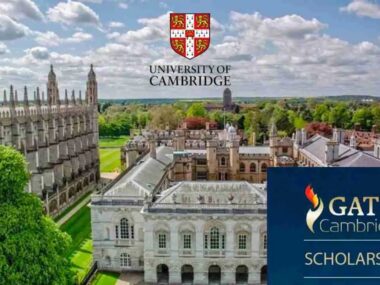
Cambridge offers fully funded scholarships for outstanding international students at postgraduate level, with a strong emphasis on academic achievement and leadership potential. The Gates Cambridge Scholarship, one of the most prestigious postgraduate awards in the world, is open to students from any country outside the United Kingdom and covers full tuition, a living stipend, and additional discretionary funding.
Cambridge scholarships are intensely competitive, but the university’s commitment to global talent means that strong candidates from under-represented regions are actively sought.
University of Edinburgh
Edinburgh consistently ranks among the UK’s top universities and has a strong record of funding international students at postgraduate level. African students are well represented among scholarship recipients here, and the university’s global outlook makes it a particularly welcoming environment for students from developing regions.
University of Manchester
Manchester offers full scholarships across multiple disciplines and has a particular focus on students from developing countries. Its scholarships span humanities, sciences, engineering, and social sciences, making it relevant to a wide range of academic backgrounds. The university’s size also means a larger volume of funded opportunities compared to smaller institutions.
University of Bristol
Bristol offers competitive full scholarships covering both tuition and living costs for international students with strong academic records. Its scholarship programmes are targeted enough to be meaningful but broad enough to accommodate students from diverse fields and backgrounds.
Imperial College London
Imperial is a world-leading institution in science, engineering, medicine, and technology. For international students in STEM fields specifically, Imperial is a critical university to research. Its scholarship opportunities target academic excellence, research potential, and global impact – criteria that reward students with clear ambitions and a demonstrable record of achievement.
African students pursuing engineering, data science, artificial intelligence, health sciences, or applied technology should place Imperial high on their list of institutions to investigate thoroughly.
University of Exeter
Exeter has built a strong reputation for global inclusion and active support for students from developing countries. Its fully funded and near-fully funded opportunities at postgraduate level focus particularly on sustainability, international development, and global studies – fields with strong relevance to the challenges facing many African nations. For students whose academic interests align with these areas, Exeter represents one of the more accessible pathways among the UK’s top universities.
Who Qualifies for Full Scholarships at UK Universities
Academic Performance
Strong grades are the starting point, but they are not the whole story. Scholarship committees at most UK universities understand that academic environments in different countries are not equivalent.
- Contextual achievement – meaning consistent performance within the constraints of your specific educational system – is considered alongside raw grades.
- Improvement over time and demonstrated intellectual curiosity often carry as much weight as a perfect transcript.
Financial Need
Many full scholarships prioritise students who genuinely could not fund their studies without support. If this applies to you, say so clearly and honestly in your application.
- Scholarship providers are experienced at identifying authentic financial hardship, and they respect transparency far more than vague statements about limited resources.
Leadership and Community Impact
This criterion is where many African applicants are genuinely competitive.
- Scholarship providers – particularly those funding students from developing regions – actively look for individuals who have demonstrated leadership within their communities, contributed to causes beyond their own advancement, and can articulate a credible vision for how their education will create impact back home.
- Document your community involvement, leadership roles, and civic contributions carefully before you begin applying.
English Language Proficiency
All UK universities require formal proof of English proficiency, typically through IELTS, TOEFL, or equivalent tests. This requirement is non-negotiable and should be addressed early in your planning. Preparing for and sitting the required test well in advance of scholarship deadlines removes a significant variable from your application timeline.
The Application Process: What to Do and When
- The single most important thing to understand about applying for full scholarships at UK universities is that the process almost always begins earlier than applicants expect. Leaving preparation to the year you intend to start is typically too late for the most competitive opportunities.
- Begin by identifying programmes that align directly with your academic background and career direction. Chasing a scholarship in a field that does not match your record or your genuine interests produces weak applications that scholarship committees identify immediately.
- Gather your academic documents – transcripts, certificates, and evidence of any professional experience – and have them assessed for international equivalency if required. Write your personal statement with specificity and honesty. Generic statements about wanting to make a difference or contribute to your country are universally common and universally forgettable. Scholarship committees respond to specific stories, concrete experiences, and clear thinking about what you intend to do with the education you are requesting.
- Secure strong reference letters from people who know your academic work and character well enough to speak about you in particular, not in generalities. A reference from a senior academic or professional who can describe your intellectual growth and specific contributions will always outperform a letter from a more prestigious name who barely knows you.
- In most cases, you will need to secure or apply for admission to the university programme before a scholarship application can proceed. Treat admission and scholarship applications as parallel processes requiring equal attention.
Common Mistakes That Cost Students Their Applications
- Applying too late is the most frequent and most avoidable error. Scholarship cycles at UK universities often close six to twelve months before the programme begins. Missing a deadline ends the opportunity entirely regardless of how strong the rest of your application would have been.
- Submitting a personal statement written for one scholarship to multiple different programmes without adaptation signals a lack of genuine engagement. Each scholarship has its own values, criteria, and priorities. Addressing them specifically in your application demonstrates that you have done the work to understand what this particular opportunity is for.
- Underestimating competition leads applicants to invest insufficient effort in their materials. Full scholarships at UK universities are among the most sought-after educational opportunities in the world. Treat your application with the seriousness that reflects what you are asking for.
What Life on a Full Scholarship in the UK Actually Looks Like
UK universities place significant emphasis on independent study, critical thinking, and research-based learning. This is a genuine shift from the more structured, lecture-based environments common in many African academic systems. Students who thrive are those who engage proactively with their material, build relationships with their supervisors and peers, and take initiative rather than waiting to be directed.
Cultural adjustment takes time and is entirely normal. The weather, the pace of social life, and the academic culture will all feel unfamiliar in the early weeks. Most students adapt more quickly than they anticipate, particularly when they invest in connecting with both the international student community and the broader university environment rather than retreating into familiarity.
The Long-Term Value of a UK Scholarship for African Students
The impact of a fully funded UK education extends well beyond the degree itself. Graduates return home with internationally recognised qualifications, a global professional network, and a level of confidence in navigating complex systems that has direct value in leadership, research, policy, and enterprise. Many scholarship alumni go on to influence education, healthcare, governance, and economic development in their home countries in ways that create ripple effects far larger than their individual careers.
That long-term impact is precisely why these scholarships exist. Funders are not simply paying for one student’s education – they are investing in what that student will build and contribute over a lifetime.
A fully funded UK education is one of the most significant opportunities available to an ambitious student from Africa today. It demands serious preparation, honest self-presentation, and strategic thinking about where to apply and why. But for students willing to invest that effort, it is far more achievable than it might appear from the outside.
If you are currently preparing a UK scholarship application, or if you have already been through this process, share your experience in the comments. The insights of someone who has navigated this firsthand are often more valuable than any guide – and your story might be exactly what another student needs to take the next step.


 admin
admin